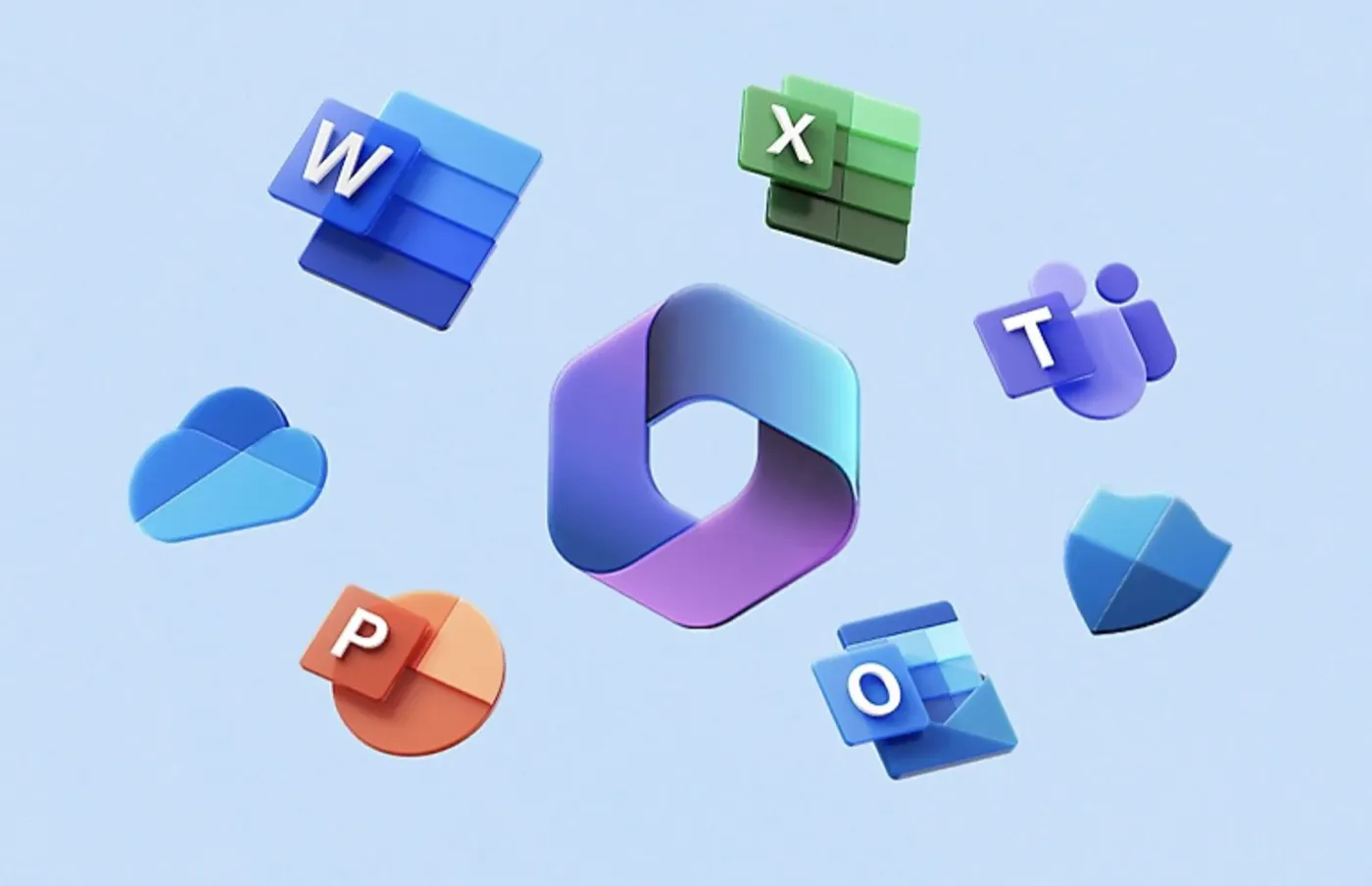
What Microsoft 365 includes
Microsoft 365 brings together the tools most businesses use every day:
- Exchange Online for business email, calendars and contacts, accessed through Outlook on a computer, phone or web browser.
- Teams for chat, video meetings and working together in channels.
- SharePoint for shared company files and intranet sites, replacing the traditional shared drive on a server.
- OneDrive for each person's own work files, synced across their devices.
- Office apps including Word, Excel, PowerPoint and Outlook, either in a web browser or installed on computers, depending on the plan.
Choosing the right licence
Microsoft offers several business plans, designed for organisations of up to 300 users. The three most common are:
- Microsoft 365 Business Basic includes business email, Teams, SharePoint and OneDrive, with web and mobile versions of the Office apps. It suits staff who mainly work in a browser or on a phone.
- Microsoft 365 Business Standard includes everything in Business Basic plus the installed desktop versions of the Office apps for Windows and Mac. This is the plan many office based staff need.
- Microsoft 365 Business Premium includes everything in Business Standard plus advanced security and management tools: Intune for device management, Microsoft Entra ID P1 for conditional access, Microsoft Defender for Business and information protection features.
You do not have to put everyone on the same plan. A warehouse team that only needs email and Teams on their phones might be fine with Business Basic, while office staff use Business Standard or Premium. Microsoft also sells add ons such as Microsoft 365 Copilot. We review licences regularly to make sure you are not paying for more than you need, and we will explain the options and costs before you commit.
Migrating to Microsoft 365
We regularly move businesses into Microsoft 365 from:
- Google Workspace, moving mail, calendars, contacts and Google Drive files.
- Other email hosts, such as web hosting packages or older hosted Exchange services.
- On premises Exchange servers that are ageing or out of support.
- File servers, moving shared folders into SharePoint and personal folders into OneDrive. See our cloud services page for more on this.
A good migration is mostly planning. We check your domain records, list every mailbox and shared folder, agree a cutover time and make sure email keeps flowing during the switch. Afterwards, we set up Outlook and Teams on laptops and phones and help your team find their way around.
Securing Microsoft 365
Microsoft 365 accounts are a prime target for criminals, because one stolen password can give access to email, files and the ability to send convincing scams to your contacts. We secure every tenancy we manage:
- Multi factor authentication for every user, so a password alone is not enough to sign in.
- Security defaults, Microsoft's free baseline settings that require multi factor authentication and block older sign in methods, for businesses without Business Premium.
- Conditional access for Business Premium customers, giving finer control such as requiring a managed device or blocking sign ins from unexpected countries.
- Separate admin accounts with the minimum access needed.
- Sensible sharing settings for SharePoint and OneDrive, and blocking automatic email forwarding to outside addresses.
- Email security on top of Microsoft's own filtering. See our email security page.
These settings also go a long way towards the requirements of Cyber Essentials, which expects multi factor authentication on cloud services.
Managing devices with Intune
Microsoft Intune, included in Business Premium, lets us manage company laptops and phones centrally. New laptops can be set up automatically when a user signs in for the first time, security settings and updates are applied consistently, and a lost or stolen device can be locked or wiped remotely. For staff using personal phones, app protection policies can keep work data separate from personal data.
Getting more from Teams and SharePoint
Many businesses use Teams only for video calls. Organised properly, it can also replace long email chains with channels for each team or project, keep the files for each project in one place and make it easy to find the latest version of a document. We help you design a simple structure, set permissions so the right people see the right things and show your team how to get the most from it.
Day to day Microsoft 365 administration
Once everything is set up, there is a steady stream of small jobs: setting up new starters, removing leavers securely, creating shared mailboxes, changing permissions and adjusting licences. As part of our support, we handle all of this for you. Ask us by phone on 0191 543 3432 or email support@cyberfits.co.uk and our team in Sunderland will sort it.
If you are thinking of moving to Microsoft 365, or want a health check of your current setup, get in touch.